
The Founder’s Perspective: Michael Ruane, Chief Executive Officer of The Prescription Center
Summary
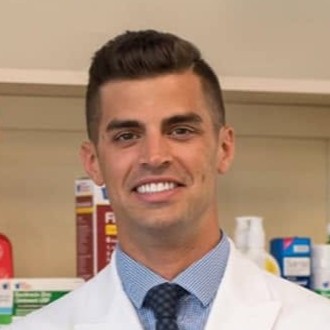
Westcove Partners spoke with Michael Ruane, Chief Executive Officer of The Prescription Center, to discuss his experience navigating a healthcare transaction. In this Q&A, he reflects on the decisions, challenges, and insights that shaped his journey.
About The Prescription Center Transaction
The Prescription Center Partnered with Altruix (a portfolio company of WindRose Health Investors)
Based in Scranton, Pennsylvania, The Prescription Center (“TPC”) operates both a specialty pharmacy focused on behavioral health and a retail pharmacy, serving more than 6,700 patients and filling over 170,000 prescriptions annually across Northeastern Pennsylvania. The transaction aligns a highly regarded independent pharmacy with a scaled behavioral health pharmacy platform to expand access and enhance continuity of care for complex patient populations.
“Westcove treated this process with the same care and urgency that we’ve dedicated to our patients. Their team was accessible and relentless from start to finish, guiding us through each step and making a complex process feel manageable.”
– Michael Ruane, Chief Executive Officer of The Prescription Center
Altruix was formally backed by private equity firm WindRose, but recently announced a secondary recapitalization with Frazier Health Services.
How did you know it was the right time to pursue a transaction, and what finally pushed you to move forward?
In June of 2024, I began to realize that what we were putting together in terms of an organization and our growth trajectory, that we were building something valuable.
So, I proactively reached out to your team at that time, but I knew that I was not going to be ready to sell for a transaction for another year or so. It was the intuition of knowing that something really valuable was being built, while also watching some transactions in the market trade at really appealing multiples.
That is really what drove my decision. I figured I could take some chips off the table and find the right partner to move forward with, and that is exactly what I have done.
How long had you contemplated doing something before ultimately stepping into it? Had you been thinking about it for years?
No, it was honestly just a few months ahead of my outreach to your team, I would say. At the time that I was reaching out, I knew that I needed to maintain the same performance and that trajectory for at least another year in order to get to where I wanted to be.
What is one thing that you would do differently if you were starting over?
Not much.
The only thing that I would do more research on is net working capital because I still sometimes catch myself thinking about.
Really, it is a unique position to be in where you do not have a single regret about selling the company. I think sometimes, especially founders, have this deep connection where they find themselves lost regardless of how much money they make on it. I do not feel that sense whatsoever. In fact, I feel relieved, and I think that it worked out perfectly.
What surprised you most about the process?
The level of diligence, for sure. It was an extensive period where I do not think that you could fully understand or appreciate how much diligence goes into it on both sides.
Number one, the preparation. I had no idea that we would prepare for several months prior to going to market and sending out even just the teaser.
Also, the 60 days post-signing of an LOI was a very long, extensive process that went from sunup to sundown most days. The level of detail that went into it was certainly something that I was not prepared for.
What do you think was the most challenging or hardest moment for you during the process?
You always want to make sure that you are getting as much out of the deal as possible. When you sign that LOI, it is that commitment. You are saying, this is what I am selling the company for.
I think it is healthy, and probably a good idea, to decide proactively before going to market what the number is that you want to get for the company.
As long as you are able to land there once you go to market and get those offers coming in, I think that simplifies it.
What about your employees and your customers? How were you thinking about them, and ultimately, how do you feel it all played out?
Employees in particular, and I think everybody knows this, were at the forefront of most conversations.
There was not going to be a partnership or a sale of this company to any sort of organization that said, “We are going to cut costs by reducing employees.” That was not even going to be entertained because I would not think that would be fair to my team, who was there since day one helping us build it.
They were at the forefront, ensuring that their pay would remain the same, if not better, ensuring that they maintained their benefits, if not better, and ensuring that their PTO improved. Certain things had to be concrete before I would ever entertain even a dollar amount that came through.
Patients, we made sure to align with an organization that was serving a similar patient population. That was incredibly valuable and important to us, to make sure that they understand the level of care that it takes to care for patients that are behavioral health, with mental illness, substance use disorders, HIV, and hepatitis C.
Those patient populations are unique in the sense that they do often require a little bit higher level of service and additional white-glove service. Fortunately, we did find a partner that specialized in that patient population as well, which sort of made it easy.
At what point in the process, or maybe after, did you truly feel like you made the right decision?
For me, selling the company was never a regret. Everybody has their own side. Selling the company was never a regret.
How does your life look now compared to where you were before the transaction?
I will say that there is a lot more flexibility in my life post-sale that I have never had before.
Before selling the pharmacy, every single doctor’s appointment or haircut, or it did not matter what it was, had to be before work or after work. I was restrained to the pharmacy nine, ten, twelve hours a day. It did not matter.
Having that flexibility now and has really been life changing. I think it is just so nice to have a little bit more freedom where you could work and be effective, but it is a change in atmosphere, which has only been for the better.
I needed to take those chips off the table. The company became too valuable, and in the pharmacy world, the regulations and the ever-changing PBM reimbursements, every day you go in there and you never know what is going to be on the fax or in your email.
You never know if the reimbursements are going to be dropped drastically, if an audit is going to come in and try to crush you, or if someone is going to try to terminate you from a network for something completely silly just because they can.
What would you tell a founder who is worried about giving up control?
That is tough. There are certainly challenges that come with that. You are no longer the final decision maker.
That is something that you have to prepare for and come to terms with prior to the deal because that is the reality. Post-sale, you are no longer in charge. But as long as you are aware of that and accepting of it, I think it is important to acknowledge that fact before you sell the company.
If you are not willing to do that, then I would probably advise against selling the company.
That was something that I looked forward to. Maybe I am different, but that was something that I did look forward to.
How did you evaluate and determine which partner would be right outside of just valuation? What stood out to you as being something that was very valuable?
With Altruix in particular, it was nice having a former owner of an independent pharmacy leading the company. Although I did not know anything about it, there was just a nice sense that these are a bunch of independent pharmacies that are being acquired.
They are all serving the same patient populations, meaning there is already an expectation that they can appreciate who the patients are and what the patients need.
What would be a valuable piece of advice that you received during the process that helped you?
I really think it is important to have your mind made up prior to going into the deal. You have to know what type of partner you are looking for. You have to know what type of relationship you want with that partner after you sell the company.
Meaning, do you want to stay on full time? Do you want to stay on part time? Do you want to negotiate an advisory role? Do you want to roll equity?
All of these things have to be thought about prior because there is so much going on during the actual selling of the company that it really would be challenging trying to make your mind up along the way.
Being able to come to terms with what it is that you want, especially getting one price for the company, whether that is $100 or $100 million, it is all about what you are going to end up with.
The top-line dollar is great to consider, but make sure that you look into that bottom-line number and what you are going to walk away with. I think that having that in mind prior to going into the sale is important because you are thinking clearly prior to even engaging any sort of buyers.
How was your experience working with Westcove?
I have never met a group of people where, if it were you and me on this call right now, we would hang up, and then there would be a next call in three days, and Amr, Andrew, Bill, and everybody else on that call would know exactly what I told you today. Everybody is always on the same page.
It made it really simple to navigate an otherwise really challenging process, to have a team that is so engaged with each other on the back end. Being on the same page sounds like it is really simple, but it made it much simpler and easier to navigate the nine-month process.
That is what I would say about Westcove. I think that you guys did a phenomenal job.
What are you excited about next in the next chapter of the business?
It is a different seat that I am sitting in now, but it is an exciting seat to be sitting in because of the fact that it is a high-growth company.
We are looking to make acquisitions. We are looking to build pharmacies in new geographical areas. We are looking to really double, triple, or quadruple where we are at today.
It still gives you that entrepreneurial mindset going into work every day. I am on the operations team. I am tasked with finding some of these opportunities for us and developing pilot programs.
It is different in the sense that I am no longer the owner, but I am just as involved with that critical thinking that it takes to actually execute on a plan. I am looking forward to the position that I am in today because it does come with a lot of that entrepreneurial mindset that you need.
This testimonial may not be representative of the experience of other customers. There is no guarantee of future performance or success. Each individual customer experience may differ and may not always be representative of the services provided.

